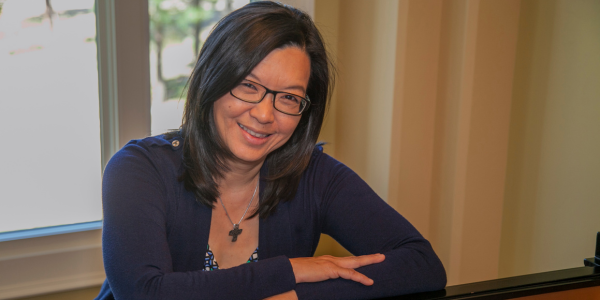
Krassimira Jordan is Professor of Piano and Artist-in-Residence at Baylor University in Texas. A native of Varna, Bulgaria, she studied in Sofia, Vienna, and Moscow, where she was a pupil of Stanislav Neuhaus and Emil Gilels. Before joining Baylor University Krassimira Jordan was Professor of Piano at the University of Music and Performing Arts in Vienna, Austria, where every summer she conducts extensive masterclasses.
A native of Montréal who now makes his home in Boston, Marc-André Hamelin is noted for his expansive repertoire, virtuosic technique, and thoughtful expression. The 47-year-old pianist studied at the École Vincent- d'Indy in Montréal and Temple University in Philadelphia; his teachers include Yvonne Hubert, Harvey Wedeen, and Russell Sherman. He won the Carnegie Hall International Competition for American Music in 1985, and he has received numerous awards for his recordings, including 12 prizes from the Deutschen Schallplattenkritik, six Juno awards, and eight Grammy nominations. He is an officer of the Order of Canada and a Chevalier de l'Ordre national du Québec.
Marc-André Hamelin is a classicist, a tone-poet of the piano capable of coaxing fine shadings from the instrument even when playing the most demanding repertoire. A lover of the enigmatic, he has been a champion of lesserknown works, performing and recording pieces by Charles-Valentin Alkan, Paul Dukas, Nicolai Kapustin, and Pantcho Vladigerov, among others. His performances leave listeners fascinated by the deeply felt, noble expression in his playing. He recently took time out of his busy schedule to discuss his repertoire, thoughts on technique and interpretation, and his approach to performance.
You have widely performed the late sonatas of Beethoven and Schubert. What other sonatas or works of both composers do you plan to include in your programs in the future?
I must confess that I prefer Beethoven's later period, and it is rather unlikely that I will give much attention to the earlier sonatas. To me there's really nothing like late Beethoven-it has wonderful enigmatic qualities and the music is notationally ambiguous so that many interpretations are possible. For this reason, and many others, I find it very rich and quite irresistible.
I've been playing the Schubert B-flat Sonata (D960) for nine or ten years and I still find wonderful things in it. If I could include it on all of my recitals until the day I die I don't think I would ever get tired of it. It's always fresh to me. I've done the great A Major Sonata twice, and I would like to return to it at some point-there's so much more that I could do with it now. And there are so many other works of Schubert that I would like to explore, such as the G Major Sonata, or the one in A minor (Op. 42). And some of the impromptus are just to die for.
You have recently played and recorded a great deal of Brahms. Do you feel a particular partiality to this great German Romantic?
That is difficult to answer. When one plays Brahms there is so much that does not need to be verbalized or put into definite thoughts. The structural, harmonic, and melodic force of the music alone is enough to carry me through. In many ways, something like the Second Concerto is abstract music. That might seem a harsh pronouncement, but I don't think there's anything wrong with music not expressing a definite concept, a definite idea, or a definite feeling. In fact, it's often more appealing when there's an aura of mystery around it.
What about Bach, Haydn and Mozart? You recently recorded some Haydn that earned a Grammy nomination.
Yes, a 2-CD set comprising ten of the sonatas, and I should add that a second set of two CDs will appear in August 2009. I certainly think Bach is essential, I just haven't played him a lot. I've been carrying the fifth French Suite in my recitals for a while. There's just so much repertoire, and one can't do everything. I've played quite a bit more Mozart than Bach, actually: the sonatas K. 330 and K. 570, and the A minor Rondo, for example. I was asked once to open a collaborative concert with the Sonata in C Major K. 545, which is actually quite difficult to render in all its simplicity. I also had to wrestle with a piano which was very unevenly voiced. So I'd like to play it on a really good piano one of these days.
How do you succeed in never impeding the perception of details through your use of the pedal?
I pedal with my ear. For me, pedaling has become absolutely subconscious-I never think about it-my ear and my subconscious dictate what to do. To explain how I pedal in a certain passage I would have to watch my foot and say "Oh yeah, that's what I do!"
I've watched you very carefully in your practicing and performances, and I think you're very picky about how the pedal has been adjusted.
Sometimes I will ask for an adjustment, for example if the pedal is so shallow that the slightest weight on it will lift all the dampers. I'm also particular about una corda adjustments. There are some pianos on which the contrast between tre corde and una corda is too great. I like a more subtle play, so there's just enough of a difference to be noticed but not a marked one. I really regard the pedals as providing a kind of connective tissue in the textures, and in a way they're the lungs of the instrument.
How is it possible that for you all kinds of piano writing remain transparent?
I guess it has to do with how I hear things. Whenever I work on something that has a number of layers, I try to think of it as an orchestral score where all of these lines would be distinguished by different instruments. It could be heard that way on the piano as well, you just have to work a little harder at delineating voices. But it's worth it, because the result is completely different. When you really start to listen orchestrally, you approach the piano from a different perspective.
I know that when you go to Vienna, you spend days at Doblinger, the second-hand music shop...
I wish I could spend days! In addition to the regular ground-floor second-hand section there is also a cellar, very deep underground, and last time I was there I was told of the existence of that cellar by Mr. Lauermann, who takes care of the second-hand music. I was there by myself, and it was a little frightening. It's quite dusty, a little like a crypt, and for a moment you wonder if you'll be enclosed in there forever! It's actually a wonderful environment, full of small treasures.
Picture yourself in a small town, with a little shopping district full of wonderful little antique shops, and you see all of these beautiful, fine objects on shelves, ceramics, china, beautifully bound old books. It's all there and it's all free. So you can take home whatever you want, polish it, and see what comes out. And that's exactly what I do.
Not a current subscriber to the print magazine Clavier Companion?
Subscribe Today!