Spring 2005, Vol. 16 #1

Editor's Note: March 28, 2005, marks the one hundredth anniversary of the birth of Frances Clark. As a special tribute to her, in this column, we are featuring the following guest editorial written by her colleague and friend, Louise Goss.

Remembering Frances Clark

by Louise Goss

It's hard to believe that in March 2005 Frances Clark would have turned 100. For me, it's even harder to believe that for over half those years she was my teacher, mentor, colleague and treasured friend.

Following her death, Warner Brothers devoted the back page of their weekly newsletter, to a simple memorial tribute:

Frances Clark 1905-1998
Respected, Revered, Remembered


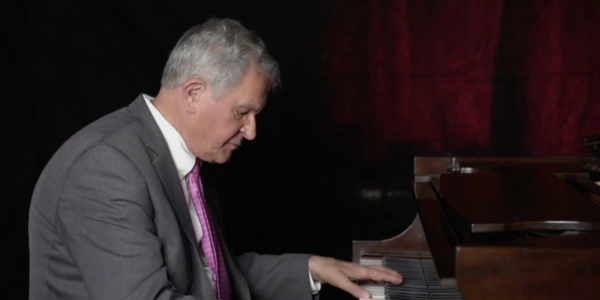
Once again, THREE multimedia articles this issue! Audio and video clips, additional text, music played by young students, one VERY strange photograph (for a piano teachers' magazine) - let this website supplement your articles in the print magazine!

Why did her publisher wish to remember her so eloquently? What were the qualities that made her the first and greatest piano pedagogue of the 20th century?

First, she was steeped in a rich liberal arts tradition as well as excellent training in the standard music conservatory curriculum. This gave her a broader view of what we mean when we refer to "music education." As a major in English and Philosophy at Kalamazoo College in Michigan, she delighted in rigorous academic discipline and the life of the mind.

During her undergraduate years she also pursued piano study at a nearby University, and as a sophomore was made teaching assistant to her well-respected teacher. Later at The Juilliard School, the American Academy at Fontainebleau and the Paris Conservatory, she was exposed to the full gamut of conservatory experiences - intense concentration on technical development (especially in her study with Isidore Philipp), vast exposure to repertoire, and the entire smorgasbord of keyboard skills, including sight-reading with Nadia Boulanger.

Perhaps the most special aspect of her education was her practice teaching in English with a superior teacher in a local high school. Some of you may have heard the story of her first practice teaching experience with Ms. Bender. Frances was to present "The Lady of The Lake" and she came to her pre-class conference full of enthusiasm and equipped with a lengthy and detailed outline for her presentation. Part way through the conference, Ms. Bender asked for the lesson plan and dropped it into the wastebasket. Then she said, "Frances, do you like this poem?" "Oh, yes, I love it!" "Then why don't you find a way to make your students love it?" Sixty years later Frances still saw this experience as seminal in her own development as a teacher: "Make them love it!"

In early 1960, when the New School for Music Study (in Princeton, NJ) was still on the drawing board, Frances and I were discussing its name. Frances suggested, "Let's call it the New School." I said, "That's a fine name for now, but in five years it won't be new any longer." Without losing a beat, Frances replied, "Well if it isn't, I won't want anything to do with it." This was typical of Frances. With her, things were always changing, always growing, always evolving into something fresh and new. I learned this about her on many occasions and in many ways.

It was my privilege to be in the first piano pedagogy class Frances gave. In the first semester, she lectured on teaching and learning as they applied to music education at the piano. She also invited us to observe her teaching of children. It was magical - joyous, intense, earnest, fun and always exquisitely musical. Offsetting the intensity, the perseverance, and relentless demands of her teaching, were the joy, the wit, the laughter and just plain fun.

She came to be known as "America's First Lady of Piano Pedagogy." What were the measures of her greatness?

  • She believed passionately that there is music in every child. She scoffed at the idea that in music some "have it" while others don't. She proclaimed and daily proved that, properly taught, every child can know the joy of making music at the piano.
  • She believed that the teacher's job is to lead children to the thresholds of their own minds - to discover the innate music in every child and nurture its development.
  • She believed that piano lessons must be music lessons from the very beginning, that developing complete musicianship is the goal of every lesson.

Over against these high pedagogical purposes, were some simple and practical maxims:

  • "Teaching is not telling. Tellers belong in banks, behind bars."
  • "Students really know something when they can use it on their own without any help from you."
  • "The teacher's highest priority is to become dispensable to her students."
  • "Meet students where they are, not where you are, and not where you want them to be, but where they really are."

Frances really did know how to meet students where they were. I remember her teaching a whole afternoon wearing a boy scout hat because its little owner had asked her to. Of course, that was the day the dean dropped in to visit, but Frances went right on teaching and she didn't take off the hat!

I also remember a team of high-spirited high school boys - four of them who didn't practice much, didn't play very well, but loved music, loved their lessons, and loved a good time. To insure a recital success, Frances created an 8-hands team for them, gave them lots of extra help and lots of practice time in her home studio. Because of who they were and their comfort level with her, at the end of each practice period they left behind a practical joke - turning the pictures to the wall, replacing piano benches with sofa pillows, etc. When they came for their next lesson, there was always a practical joke awaiting them - once a note on the front door said "Go around to the back." On the back door they found a note, "You fools, go around to the front." No comment was ever made on either side. The night of the recital, all four of them came in overalls. After their prank had had its full effect, they took off their overalls, and, voil¦! Underneath was appropriate recital attire. No one enjoyed it more than Frances!

  • "Be really honest about how hard you are trying."

Frances grew very impatient with students who weren't really trying. I recall a college sophomore who came unprepared for a lesson, so filled with excuses that thinking and learning were impossible. After 5 minutes, the studio door opened, and Frances emerged, tossing over her shoulder, "I'll be in my office. Call me when you're ready to think."

I also remember a graduate pedagogy student excusing himself for the poor performance of one of his students in a repertoire class. Frances said, "I think it's important for you to admit that you chose the wrong piece for that child." More excuses. "All that may be true," Frances persisted, "but the point is, you chose the wrong piece." More excuses. "Why don't you just admit you made a mistake?" "All right," he yelled," I made a mistake!" "Well," Frances declared, "don't dwell on it!"

  • "If a thing is worth doing, it's worth doing right." And in the same vein,
  • "Always strive for perfection."

This was never more true than in our work together on the first edition of Time To Begin. When it was finally finished, we were in Kalamazoo, and Summy-Birchard, our publisher, was in Chicago. The engravers and typesetters were standing ready, and the book was to go off on the 5:00 a.m. milk train. At midnight, I jubilantly wrapped the book. Frances seemed quiet but finally said, "Let's go for a ride." We rode a long time in silence, and then she began to talk - slowly, cautiously, painfully questioning all the work we had done. Two hours later we returned to the studio, unwrapped the book and started over. And two years later, Time To Begin appeared!

  • "Live it up!"

I remember Frances at a master class in Denver. She was teaching a Bach Invention and the student wasn't "living it up" at all. Suddenly Frances began to dance - up and down the aisles she went, pulling people out of their seats, until a whole roomful of surprised piano teachers found themselves moving, breathing, dancing, laughing - living it up!

  • "Be yourself!"

In this, as in so many things, Frances was our best model. She could be, and loved to be, the grand dame. But there was a real down-home side to her, too, that would have surprised those who knew her only professionally. She liked to eat her 5:45 a.m. breakfast at our local diner where the waitress hugged her and the truckers called her Fran. She liked to walk barefoot in the grass. And she loved to dress like a bum.

Shortly after the New School moved from Princeton to Kingston (NJ), our secretary was in the friendly little post office, getting acquainted with the postmistress and straightening out who we all were. The discussion turned to Frances, and the postmistress said, in amazed disbelief, "You mean the lady in the gray knee socks is the President of the New School?"

Yes, she was. And what did this lady in the gray knee socks accomplish?

  • It was she, almost single-handedly, who changed the image of the private piano teacher from that of the underpaid, down-trodden "little lady down the block" into that of a fully qualified, wholly respected professional with charisma, style and pizzazz.
  • It was Frances who, for the first time, brought the liberal arts tradition to bear on teaching music at the piano. She believed that music was neither magic nor mystery. To her, it was a precise science and an exacting art that could be taught according to the same teaching and learning principles as any other subject. This was true of how she taught, and of the library of piano teaching materials that bears her name.
  • It was she who pioneered in the development of group teaching - a concept based on the belief that children learn faster and more naturally together than alone, that a peer model is a more believable model than a teacher can ever be, that a successful group lesson is one in which every student is intensely engaged for every minute of the lesson, and that when everyone is learning happily, time flies.
  • It was her extensive library of study materials for piano students that led the way in off-staff notation; interval reading; a program of comprehensive musicianship designed for year by year growth; experience with contemporary piano literature from the very start; an emphasis on learning how to learn, based on a logical and detailed program of practice skills and how to use them alone at home.
  • Frances's early vision of training teachers as a vital part of the college music curriculum became the catalyst and model for hundreds of degree programs in piano pedagogy at colleges and universities across the country and around the world.
  • More than any other piano teacher before or since, Frances Clark did extensive research in what makes the most natural and logical sequence for learning music at the piano. Once codified, this order permeated all of her own teaching as well as the teaching materials she prepared. In addition, for the first time, she made a thoroughgoing application to piano study of the concepts of preparation, presentation and follow through. No element was ever presented without extensive preparation, and every element, once learned, was so thoroughly reinforced that unlearning could never begin.
  • In her teaching, all learning proceeded in four stages: sound, feel, sign, name. Imagine how revolutionary that was at a time when most new discoveries began with a statement like, "Today we're going to learn about eighth notes."
  • It was Frances who insisted that while repertoire, technique and musicianship might be the cornerstones of piano study, mastering them was uncertain at best without a systematic way to practice. She devised a plan for practice and a tool box of practice steps that virtually guaranteed steady progress and success.

A hundred years have passed, and a new millennium has dawned. But it's not too late to sing, "Happy birthday, dear Frances." Who she was and what she did lives on ­ in us, and in all those we teach, and in all those they teach, and on and on and on.


About Our Cover Art

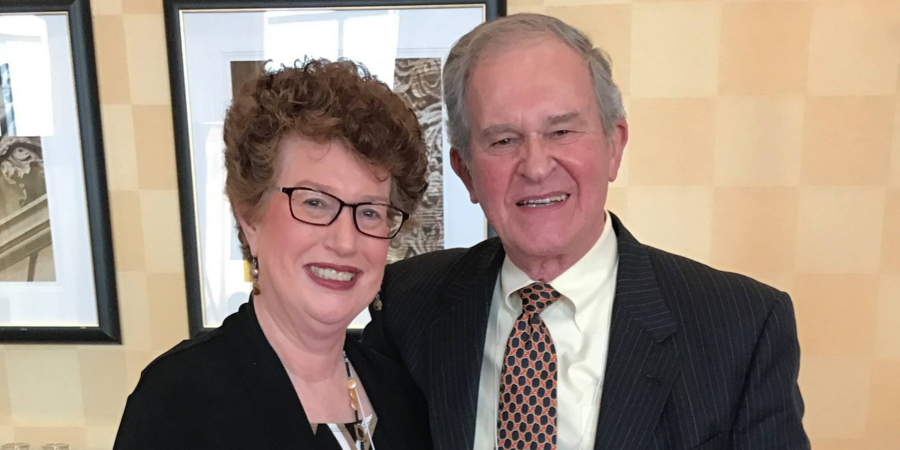
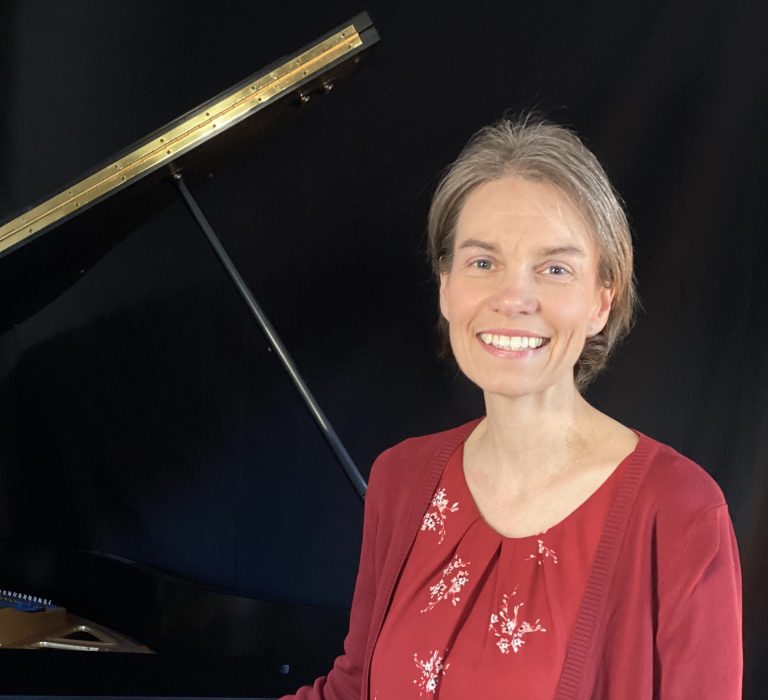
We wish to thank Louise Goss for providing the pictures of Frances Clark that appear on the magazine's cover.

To see a larger image of our cover art, please visit our Art Gallery.


MULTIMEDIA ARTICLES


Adult Piano Study Department

Michelle Conda's inaugural article as Associate Editor of the Adult Piano Study Department includes audio and video clips of an 89-year old piano student who "tells it like it is" about her past experiences with certain piano teachers. See and hear for yourself the effects of the dark side of our profession as "Lucy Tells All."


Teacher/Student/Parent Department

Bruce Berr completes Part 3 of a series of interviews with parents of successful learners: "What special qualities do parents of children who succeed at the piano share?" There are audio clips from the interviews, recordings of the children performing, as well as much more of the interviews in text form than space would allow in the print magazine. The website presentation closes with additional comments from others with special insight into this compelling topic.


Rhythm Department


In response to "How has playing another instrument affected your teaching of rhythm at the piano?" Anne Olson supplies two short video clips. These demonstrate how certain kinds of bowing help a player to do detached articulations with rhythmic ease and continuity.


Also be sure to check out our page of
links to ALL of our multimedia articles in past issues.


Table of Contents from

Spring 2005, Volume 16, Number 1


 The Magic Triangle:
Teacher/Student/Parent
Barbara Kreader, Editor

What special qualities do parents of children who succeed at the piano share? Part Three

Mr. and Ms. "K"
Mr. and Ms. "S"
Bruce Berr


 The Other Teacher:
Home Practice
Elvina Pearce, Editor

What tips would you give for practicing trills, accompaniment patterns, and polyrhythms in the music of Bach, Haydn, and Chopin?

Rick Andrews
Karin Edwards
Robert Satterlee


 Independence Day:
Music Reading
Craig Sale, Editor

How do you teach secure reading on ledger lines?

Rosemary Colson
Melissa Falb
Mark Mrozinski


 Let's Get Physical:
Technique
Scott McBride Smith, Editor

How do you adapt your technical approach to allow for individual student differences?

Judith Fairchild
Cheryl Gingerich
Tianshu Wang


 The Heart of the Matter:
Rhythm
Bruce Berr, Editor

How has playing another instrument affected your teaching of rhythm at the piano?

Joanna Grace
Jennifer Merry
Anne Marie Olson


 Issues and Ideas:
Perspectives in Pedagogy
Rebecca Johnson, Editor

When viewing intern teaching, what issues do you find yourself constantly addressing?

Sandra L. Carnes
Barbara Fast
Andrew Hisey


 It's Never Too Late:
Adult Piano Study
Michelle Conda, Editor

"Lucy Tells All" - A report on an adult learning presentation at the 2003 NCKP

Victoria Johnson
Pamela Pike


 Putting It All Together:
Repertoire & Performance
Nancy Bachus, Editor

When do you introduce original classics to beginning students and what are some of your favorite pieces/collections at this level?

Lynn Singleton
Janet Bass Smith
Chee-Hwa Tan


 Tomorrow Today:
Technology
George Litterst, Editor

How do you use technology for summer camps and special summer activities?

Jennifer DeBrosse
Kathy Maskell
Lynette Schwane


The World Around Us:
News and Views
Helen Smith Tarchalski, Editor

Unleashing the power of the profession: In search of the elusive "We"

Brian Chung


    Keyboard Kids' Companion

Helen Smith Tarchalski, Editor

 Puzzles, Practice Projects, Meet the Composers, and more!


If you are not a subscriber,
here's how to
become one

To read Samplers from recent past issues,
go to
Past Website Issues